

Choosing between a TV stand and an entertainment center is one of the most impactful living room decisions you can make. Get it wrong, and you'll either waste money on furniture that crowds your space or end up with a piece that can't handle your gear. The global entertainment centers and TV stands market was valued at $2.9 billion in 2024, projected to reach $4.02 billion by 2033, a clear sign that homeowners are taking media furniture seriously. If you want guidance that cuts through the confusion and actually helps you choose, you're in the right place.
In my experience helping people set up their living rooms, the biggest mistake is not measuring the wall first. The second biggest is underestimating how quickly devices multiply. Both problems are solvable, as long as you know what you're really shopping for.
Key Takeaways
-
Size drives the decision: TV stands need just 3 to 6 feet of wall space, while entertainment centers require at least 6 feet and full wall units can span 10 to 15 feet. Measure your available wall before you shop.
-
Budget gap is significant: On average, TV stands in the U.S. range from $100 to $1,500 depending on materials, size, style, and features, while Fixr's built-in entertainment center data shows custom full-wall units averaging $7,000 to $22,000. Match your investment to your timeline in the home.
-
Modular is the fastest-growing format: 24% of buyers are now choosing modular options that adapt to changing room layouts, especially in urban homes where space-saving designs are critical. If you're unsure, start with a quality modular console and add as needed.
-
Smart features are becoming standard: About 38% of buyers are now prioritizing smart furniture with integrated features like USB charging and ambient lighting. Factor connectivity into your shortlist, not just storage.
-
Mobility matters more than you think: TV stands are easy to move and reposition, most weigh under 100 pounds and can be relocated by one or two people, making them ideal for renters who move frequently.
Quick-Start Prioritization Framework
| Option | Best For | Effort to Set Up | Time to Results |
|---|---|---|---|
| TV Stand | Apartments, renters, minimalists | Low (30-60 min) | Same day |
| Entertainment Center (freestanding) | Families, large living rooms | Medium (2-4 hrs) | Same day |
| Built-in Entertainment Center | Homeowners wanting permanence | High (days + contractors) | 1-4 weeks |
| Modular Console System | Anyone wanting flexibility | Low-Medium | Same day + expand later |
Start here if you're:
-
Renting or planning to move: A quality TV stand, fastest ROI, zero commitment, easy relocation.
-
Family with multiple devices and a large room: A freestanding entertainment center, organized, anchored, and family-friendly.
-
A homeowner who wants a forever piece: A built-in unit, adds resale value and eliminates clutter permanently.
-
Undecided or in a transitional space: A modular console, start simple, scale up.
How TV Stands and Entertainment Centers Actually Differ
Defining Each Option
A TV stand is a simple, compact piece that holds your television and maybe a few items underneath, while an entertainment center is a larger furniture system with multiple shelves, cabinets, and storage compartments. The terminology gets muddy in retail, with terms like "media console," "TV unit," and "media center" used interchangeably, but the practical difference is straightforward.
The core difference is simple: TV stands hold your television with basic storage, while entertainment centers provide a full media organization system that becomes the focal point of your room. Understanding that distinction upfront will save you from buying the wrong thing.
The Storage Reality
TV stands give you space for a cable box, gaming console, and maybe some remotes, with cabinet models holding DVDs, games, or a few books. For most streaming-first households with one console, that's enough.
Entertainment centers offer much more; you get multiple compartments for several gaming consoles, sound systems, receivers, media collections, and decorative items, with some including dedicated spots for speakers or even a fireplace insert. If your household has a gaming setup, a sound system, and a growing collection of gear, that extra real estate is not optional.
Pro Tip: Count every device you currently own, cable box, streaming stick, gaming console, soundbar, external hard drive. If you have four or more, a TV stand's storage will feel cramped within six months. Size up now.
TV Stand: Pros, Cons, and Best Use Cases
Who Should Choose a TV Stand
For most homes, especially modern apartments and multi-purpose living rooms, a TV stand offers the flexibility, affordability, and style that fits today's lifestyle. The living room furniture market reinforces this trend, with Grand View Research's entertainment furniture report noting that TV stands led the market with the largest revenue share of 38.83% in 2023.
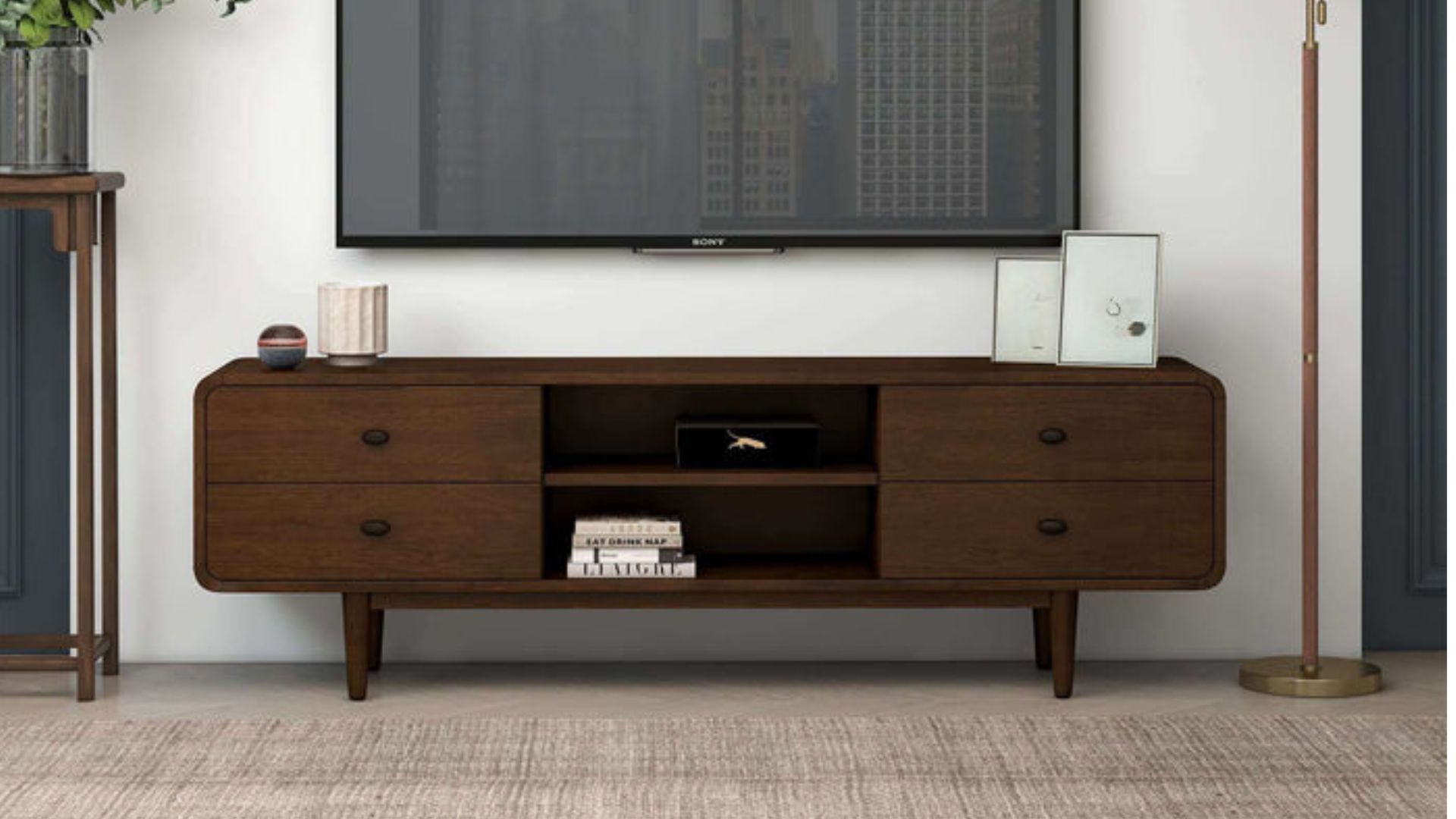
I've found that a well-chosen TV stand, particularly a solid wood or engineered-wood model, can anchor a room just as confidently as a bulkier piece, provided the proportions are right. The key is sizing up: your TV stand should be at least 57 to 65 inches wide for a 65-inch TV, ideally extending 3 to 6 inches beyond the television on each side for balance and stability.
Pros:
-
Compact footprint works in apartments, bedrooms, and smaller living rooms
-
Quick assembly: usually takes 30-60 minutes compared to hours for entertainment centers
-
Budget-friendly, typically hundreds less than a full entertainment center
-
Easy to reposition or take to a new home
-
Open designs allow better airflow for electronics
Cons:
-
Limited storage for larger device collections
-
Less visual impact as a room focal point
-
May feel undersized in larger living rooms
-
Fewer options for hiding cable clutter in basic models
Entertainment Center: Pros, Cons, and Best Use Cases
Who Should Choose an Entertainment Center
An entertainment center is a more substantial piece of furniture designed to hold not only your television but also additional components like gaming consoles, DVDs, audio equipment, and decorative items, with TV consoles, cabinets, drawers, or shelves offering ample storage space, ideal for larger living rooms or home theaters.
Lower TV stands, wall-mounted storage, and lighter modular entertainment center layouts can still feel current when they leave open space around the TV. Modern "entertainment centers" are now better described as media walls or built-in units that are lighter, often floating, and highly customizable, serving the same purpose, organizing media, consoles, and decor, but with a sophisticated, minimalist approach.
According to Global Growth Insights' TV stands market report, approximately 59% of households purchase entertainment centers with built-in cable management to support advanced AV setups, so if you're building a real home theater zone, cable management is non-negotiable.
Pros:
-
Maximum storage: entertainment centers offer additional shelves, cabinets, and drawers to store DVDs, video games, and cables, helping to keep your living room clutter-free
-
Creates a defined visual anchor and focal point for the room
-
The larger frame helps hide unsightly elements such as cables and plugs
-
Better suited to households with children who need cable-free zones
-
Higher perceived value and room presence
Cons:
-
Entertainment centers are meant to stay put; they can weigh 200 to 500 pounds when fully assembled and often require professional movers to relocate, with many larger units needing partial disassembly to fit through doorways.
-
Significantly higher cost at every tier
-
Can overwhelm smaller rooms visually
-
Can feel bulky and overwhelming in smaller homes
The Real Cost Comparison
TV Stand Price Breakdown
Retail pricing for TV stands in the United States is stratified into four broad tiers: entry-level RTA units typically sell for $80-$150, mid-range assembled units range from $200-$450, and premium assembled units with solid-wood veneers and cable management systems sit at $500-$1,200. The sweet spot for most households is the $200-$450 range, which gets you real storage, a finished aesthetic, and durable construction without premium pricing.
Over the past three years, average retail prices have risen by 8-12% due primarily to increased raw material costs. That means a stand you might have bought for $250 two years ago could now run $270-$280, still accessible, but worth factoring into your budget planning.
Entertainment Center Price Breakdown
Freestanding entertainment centers start around $500 and can reach $2,000 for high-quality retail units. A custom standard entertainment center has a cost range of $2,000 to $12,000, a large piece of furniture that does not typically cover the entire wall. For full-wall custom installations, custom full-wall entertainment centers average $7,000 to $22,000.
The bottom line: if you're renting or plan to move within three to five years, the cost math strongly favors a well-built TV stand. If you're a homeowner planting roots, a built-in entertainment center can add meaningful resale appeal and daily functionality.
Pro Tip: Before committing to a built-in, calculate the cost per year of ownership. A $600 TV stand used for 5 years costs $120 per year. A $9,000 built-in used for 20 years costs $450 per year, but adds home equity and eliminates furniture replacement cycles.
Editor's Pick: Best Overall for Style and Value
Revel Sofa TV Consoles, Best Overall
When it comes to finding entertainment furniture that bridges the gap between a basic TV stand and a statement-making entertainment console, Revel Sofa's entertainment console collection earns the top position. A TV console shouldn't just support your screen; it should anchor your living space with style and purpose. At Revel, entertainment consoles are designed to be more than functional, they're statement pieces that showcase your personality, elevate your décor, and set the stage for every movie night.
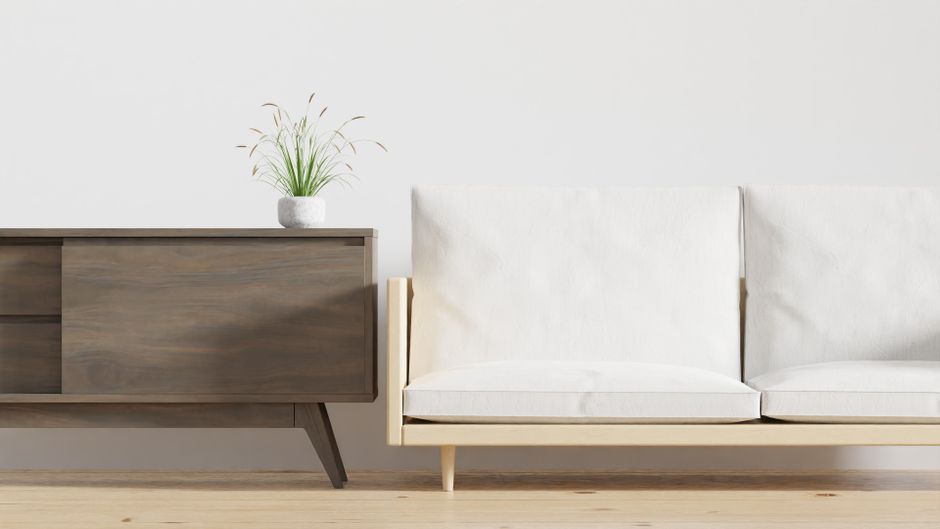
The standout pieces in the lineup are from Revel Sofa's entertainment console collection, featuring solid wood construction with modern finishes that pair functionality with style for every movie night. At 71 inches wide, it pairs solid wood construction with a clean slatted profile that reads as a design feature rather than storage furniture. Functional elegance is built in: the front-opening door conceals clutter while the adjustable shelf and cable management holes ensure your entertainment essentials stay organized and accessible.
What separates Revel from mass-market options is the ability to display and live with the piece, not just store things in it. Revel Sofa's entertainment console collection, use the open shelves to display favorite books, treasured photos, or decorative objects, creating a personal and inviting atmosphere.
Best for: Homeowners and renters who want the visual presence of an entertainment center without the footprint or commitment. The solid wood walnut finish works across modern, mid-century, and transitional interiors, making it one of the most versatile buys in the category.
Additional reasons to choose Revel:
-
Revel Sofa's entertainment console collection orders across the USA (excluding Alaska and Hawaii)
-
White Glove Delivery and Assembly option available at checkout
-
Revel Sofa's entertainment console collection covering defects and workmanship
Pro Tip: If you're styling the Linea console, place it at least 6 inches wider than your TV on each side to create that built-in, intentional look. Pair with a low-profile sofa at the same height as the console top to keep the visual weight anchored to the floor.
Common Mistakes to Avoid
Buying Without Measuring
TV stands need 2 to 3 feet of space around them to allow proper breathing room and flow; they work in almost any room when positioned correctly. Despite this, the single most common regret shoppers express is buying furniture that does not fit the wall proportionally. Always measure width, depth, and ceiling height before ordering.
Ignoring Weight Capacity
The U.S. Consumer Product Safety Commission estimates an annual average of 17,800 emergency-department injuries related to TV and furniture tip-overs between 2020 and 2022. This matters. The stand's weight capacity must be at least 1.5x your TV's weight plus accessories, for a 50-pound TV plus 10 pounds of equipment, you need a stand rated for at least 90 pounds.
Belleze's TV stand weight guide recommends always checking for two numbers before buying: the top surface capacity and the individual shelf limits. Never assume both are the same.
Choosing Based on Current Devices Only
Industry research shows average TV sizes and 75-inch-plus sales both rising as prices fall. If you own a 55-inch TV now but expect to jump to 65 or 75 inches within a few years, choose the stand width and weight capacity for that next TV today. Size for the setup you will have in three years, not just what you have now.
Frequently Asked Questions
What is the main difference between a TV stand and an entertainment center?
When you compare a TV stand vs an entertainment center, you find they're designed for different needs. A TV stand is a simple, compact piece that holds your television and maybe a few items underneath, while an entertainment center is a larger furniture system with multiple shelves, cabinets, and storage compartments. The right choice depends on your room size, device count, and how long you plan to stay in the space.
Are entertainment centers out of style in 2026?
The outdated part is usually the size and visual weight, not the idea of an entertainment center itself. Lower TV stands, wall-mounted storage, and lighter modular entertainment center layouts can still feel current when they leave open space around the TV. Modern "entertainment centers" are now better described as media walls or built-in units that are lighter, often floating, and highly customizable. The format has evolved, not disappeared.
How much should I spend on a TV stand or entertainment center?
For a TV stand, the smartest range for most homes is $150-$300, where TV stands start to feel sturdy, spacious, and styled enough for a real living room without crossing into premium furniture pricing. For a full entertainment center, freestanding units start around $500-$1,000 for quality retail options, while custom built-ins run $5,000 to $22,000 depending on size and materials.
Can a TV stand hold a large TV like a 65-inch or 75-inch screen?
Yes, with the right stand. Solid wood TV stands generally hold about 100-200 pounds or more and are suitable for larger TVs up to 75 inches, solid wood is the most popular durable material for this reason. Always verify the manufacturer's stated weight capacity before purchasing, and choose a stand at least 4-6 inches wider than your TV's actual frame width.
What is the best option for a small apartment?
TV stands are best for apartments condos, and smaller living rooms; they are lightweight and easier to assemble. A floating wall-mounted console is an even more space-efficient option for studio apartments. Floating units are mounted on the wall, creating a sleek and contemporary look and creating a sense of space and openness in living areas. If you're renting, confirm your lease allows wall mounting before committing.
The Bottom Line
TV stands and entertainment centers solve the same core problem, giving your television a safe, organized home, but they do it at very different scales. A TV stand wins on price, flexibility, and fit for smaller or transitional spaces. An entertainment center wins on storage capacity, visual impact, and long-term organization for larger rooms and committed homeowners.
For most people shopping today, the answer sits between the two extremes: a quality media console with solid construction, thoughtful storage, and real design appeal. That is exactly what Revel Sofa's entertainment console collection delivers, furniture that functions like a TV stand but looks and lives like something far more considered.
Shop Revel Sofa to explore the full collection, with free shipping on every order.
Sources
-
TV Stand vs Entertainment Center: Key Differences and Buying Guide, Homebaa. In-depth comparison of sizing, storage, and mobility. TV stands need 2 to 3 feet of space around them
-
TV Stands vs Entertainment Centers: Key Differences Explained, FITUEYES. Feature breakdown and use-case guidance. https://fitueyes.com/blogs/top-tips/tv-stand-vs-entertainment-center-differences
-
Entertainment Centers and TV Stands Market Size, Share & Report, Global Growth Insights. Market sizing data and consumer behavior statistics. https://www.globalgrowthinsights.com/market-reports/entertainment-centers-and-tv-stands-market-117913
-
Entertainment Furniture Market Size & Share Report, Grand View Research. Segment revenue share and growth projections. https://www.grandviewresearch.com/industry-analysis/entertainment-furniture-market-report
-
14 TV Stand Design Trends for 2026, Belleze. Current design trends and evolving entertainment center formats. https://belleze.com/blogs/news/14-tv-stand-design-trends-for-2025
-
Built-in Entertainment Center Cost, Fixr. Custom installation cost ranges by type. https://www.fixr.com/costs/built-in-entertainment-center
-
How Much Should a TV Stand Cost?, Povison. Price range breakdown by tier and use case. https://www.povison.com/blog/buying-guide/how-much-is-a-tv-stand-price-ranges-factors-and-smart-picks.html
-
Tv Stand for Living Room Market in the United States, IndexBox. Retail pricing tiers and market growth data. https://www.indexbox.io/store/united-states-kw-tv-stand-for-living-room-840-market-analysis-forecast-size-trends-and-insights/
-
How Much Weight Can a TV Stand Hold?, Belleze. Material-by-material weight capacity guide. https://belleze.com/blogs/news/how-much-weight-can-a-tv-stand-hold
-
TV Stand Size Guide, Povison. Width, height, depth, and safety margin guidance. https://www.povison.com/blog/home-improvement/tv-stand-size-guide-2.html
-
How to Choose a TV Floor Stand, FITUEYES. Weight capacity and safety margin rules. https://fitueyes.com/blogs/top-tips/tv-stand-buying-guide
-
Linea Solid Wood Slatted TV Stand Media Console, Revel Sofa. Product details and specifications. Revel Sofa's entertainment console collection
-
TV Entertainment Console Collection, Revel Sofa. Full product range overview. https://www.revelsofa.com/collections/tv-stand-console-entertainment-revelsofa